
Nurses first. Experts in women’s health across the lifespan.
What is a nurse-midwife?
A nurse-midwife, formally a certified nurse-midwife (CNM), is an advanced practice registered nurse with a graduate degree in midwifery and national board certification.
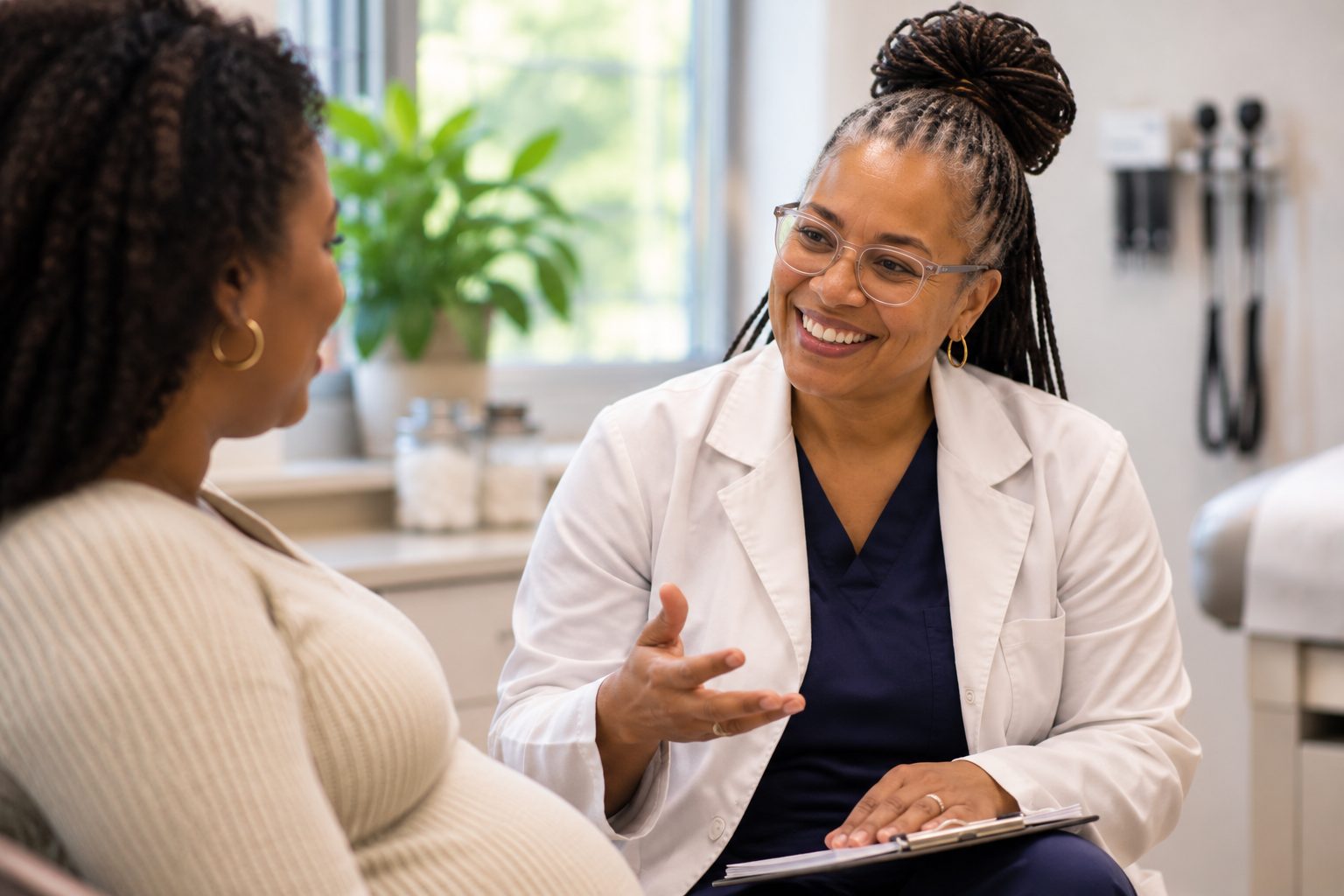
What nurse-midwives do
Care for women and families from adolescence through menopause, including pregnancy, birth, and the newborn period.
Gynecologic care
Annual exams, contraception, and family planning.
Prenatal care
Preconception counseling and care throughout pregnancy.
Labor and birth
Attending births in hospitals, birth centers, and homes.
Postpartum care
Recovery, breastfeeding support, and mental health screening.
Newborn care
Care of the healthy newborn in the first weeks of life.
Primary care
Menopause care, primary care, and prescribing medications.
Trusted partners in care
Every certified nurse-midwife is a registered nurse before becoming a midwife. That nursing foundation shapes how nurse-midwives care for patients: close observation, patient teaching, and attention to the whole person.
Hospitals, birth centers, homes, clinics, and community health centers, in large cities and small rural towns. Nurse-midwives attend nearly half of all U.S. birth center births.
The national organizations for obstetricians and nurse-midwives describe both as educated, trained, and licensed independent clinicians who are experts in their own fields and work in mutual collaboration.
Medicaid covers about 42% of U.S. births, and federal law requires Medicaid to pay for care from certified nurse-midwives in all 50 states and the District of Columbia.
How to recognize a nurse-midwife
Look for CNM or APRN-CNM after a clinician’s name. Those letters mean a registered nurse license, a graduate degree from an accredited nurse-midwifery program, national board certification, state licensure as an advanced practice registered nurse, and recertification every five years.
See how the standard was built →Common questions
Is a nurse-midwife a nurse?
Yes. Every certified nurse-midwife is a registered nurse first, then completes a graduate degree and passes a national board exam.
How are nurse-midwives educated?
Nurse-midwives earn a master’s or doctoral degree from a program accredited by the Accreditation Commission for Midwifery Education, then pass the national certification exam of the American Midwifery Certification Board. See the full path.
Do nurse-midwives only deliver babies?
No. Their national education standards include gynecologic, family planning, and primary care alongside pregnancy and birth.
Can nurse-midwives prescribe medication?
Yes. Certified nurse-midwives have prescriptive authority in all 50 states.
Does Medicaid cover care from a nurse-midwife?
Yes. Federal law requires Medicaid to pay for care from certified nurse-midwives in all 50 states and the District of Columbia.
Do nurse-midwives attend births at home?
Many do. Nurse-midwives attend births in hospitals, birth centers, and homes, and in 2024 attended 30% of midwife-attended U.S. home births and nearly half of all U.S. birth center births. Learn about community birth.
For policymakers
When you write laws about maternity care, name certified nurse-midwives specifically and recognize them as the advanced practice nurses they are.
Sources: ACNM, 2026 workforce figures; ACNM National Chartbook (CDC CNM/CM category); MedlinePlus; ACNM Essential Facts; ACOG/ACNM Joint Statement; AAFP brief on Medicaid coverage; CDC/NCHS, Births: Final Data for 2023; CDC/NCHS, Births: Final Data for 2024. All sources.